JANHAVI RAI
- INTRODUCTION:
A mother sheep is wailing in agony as her dead baby lamb lies on a snowy bed, surrounded by frightening crows. This image, which August Friedrich Albrecht Schenck painted sometime around 1878, eloquently demonstrates the ability of art to arouse strong feelings, though, the creator of this masterwork is still relatively unknown.
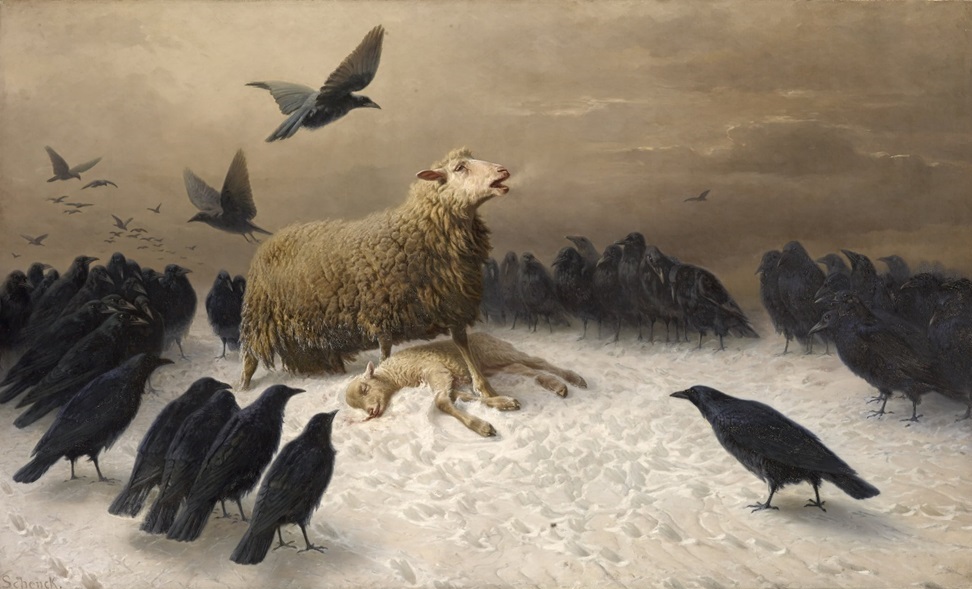
Figure 1. The anguish, a painting by Friedrich Albrecht Schenck (1878) (Source: ref.1)
The year 1828 saw the birth of August Friedrich Albrecht Schenck in Glückstadt, Denmark (present-day Germany). He moved to Paris to pursue his studies at the esteemed École des Beaux-Arts. He worked mostly as a landscape and distressed animal painter, with a focus on sheep, where his paintings were seen as a metaphor for human connections. He spent most of his career there. For this reason, the artist frequently uses the staging of sheep, for instance, battling the weather. His talents were so great that the ‘Legion of Honour’ even named him a Chevalier.
- THE COLOURS AND THE LANDSCAPE:
The observer is transported into a particular mood by its thoughtfully chosen drab tones and composition, which create a unique environment. To add to their menacing, even smothering role, the crows are positioned to surround the sheep and her lamb. By creating a space between the front crows, the artist draws the spectator into this sorrowful picture and virtually turns them into join the mother’s anguish. She looks hopelessly towards the horizon and into the distance, as if she’s pleading with God for assistance, her mouth gaping open in agony and her breath ghostly with cold.
The details, however, add to the disheartening and grim scenery. The traces of the footprints on the snow bed showcase the longing paces of the wailing mother as grief encases her and the powerlessness to evoke her baby slowly takes over her. Amidst these footprints, there lies the ones of the crows’, depicting them closing in on the mother. If one looks closely at the murder of crows, their beady eyes and their anticipating faces show the nervousness and the eagerness their form holds; they await the mother’s departure from her dead baby’s corpse so that they can finally feast on it.
- THE METAPHOR:
It’s winter and there’s no food, and a mother has just lost her child. Even though she tried to feed him and keep him safe since she knew he was in danger, he eventually passed away after yet another traumatic night. Because she is so mute and wordless, pure agony, her grief seems all the more genuine and similar to ours. The crows are quite mean. They come together when someone else is in pain because they recognize the potential that other people’s troubles present. They resemble the ones we fear the most: those who take pleasure in seeing us unhappy. The scene reminds us of a potential that we may only occasionally consider during our own darkest hours.
While I hold the aforesaid statement, talking to one of my friends, I learnt that we held different perspectives of the anticipation of the crows, which made me think of the adage “Art is not a thing; it is a way” by Elbert Hubbart; and truly, it’s a way of seeing things and not just a suspended perspective of one individual. Looking at the crows, she observed their eagerness and nervousness as their respectfulness towards the mother as they wait to consume the baby’s carcass; crows are scavengers, she said, they are not known for their compassion but for their intelligence and their hunger for their prey, there hence, the crows are only acting as designed by the nature but the guilt eats at them as depicted by the gleam in their eyes.
- INTERPRETATION OF THE ARTIST:
While the aforementioned viewpoints primarily view this as a metaphor for human suffering and misery, animals can also exhibit similar feelings to humans, as demonstrated by the case of sheep.
As mentioned by Joseph Addison (1672-1719) (English essayist, poet, playwright and politician)
“True benevolence, or compassion, extends itself through the whole of existence and sympathizes with the distress of every creature capable of sensation.”
Given these distinctly human reactions, it is reasonable to assume that the audience will instantly relate to the animal’s dire situation. It’s possible that the ewe’s defiant position over the bleeding lamb overstates her fortitude in the face of the deadly circle of crows. This piece exhibits very little nuance. Schenck intended Anguish to have a nostalgic quality, but not an overt one. His contemporaries were aware of his honesty in capturing the noble qualities of animals; in 1878, a critic for Le Figaro called the artist “one of our finest animal painters”, and said the following about him:
“All the world today regards Schenck as one of our first animal-painters. He is one of those originals, of a species not yet extinct, who prefer dogs to men and finds more sweetness in sheep than in women. With such fancies, one leaves the city for the fields and has only to do with animals. Our artist has taken this part after having profoundly studied his fellow creatures. Retired to Ecouen, to a farm, he lives in the midst of oxen, dogs, goats, asses, horses and sheep of all types, races, and species; cares for them, cultivates them, loves them, and above all studies them, as never any artist studied his models. He knows better than anyone their habitual behaviour, their favourite poses, their preferred attitudes, and the mobile play of their physiognomies. By means of studying closely the joys and griefs of these’ modest companions and humble servants of man, he has penetrated the inmost recesses of their souls, which he knows how to show us in pictures of striking truth. His animals’ heads are portraits particularized with all the care which Cabanel, Uubufe, and Bonnat gave to the human mask. The picture which he exhibits today under the title of ‘Angoisses’ is pathetic to the last degree. A lamb is wounded, lying on the ground, losing its blood, which pours out of a” horrible wound. The ravens, with their infallible instinct, scent the approaching death, and await their prey; their sinister circle is closed in, — the unfortunate little beast cannot escape them. The mother is- there; she comprehends it, the poor creature! the fate which awaits her dear nursling, and broken-hearted, full of anguish [it is the title of the picture, and it is just], she bleats for the shepherd who comes not. It is a little drama, this picture, and as poignant as if it had men for actors and victims.”
REFERENCES
- Anguish – August Friedrich Albrecht Schenck – Google Arts & Culture. (n.d.). Google Arts & Culture. https://artsandculture.google.com/asset/anguish-august-friedrich-albrecht-schenck/FgFqdCscXdr_ZA?hl=en&avm=4
- Dumont, M. (2024, September 17). Masterpiece Story: Anguish by August Friedrich Schenck. Daily Art Magazine. https://www.dailyartmagazine.com/anguish-by-august-schenck/
- Cole, L. (2017, November 27). Anguish by August Friedrich Albrecht SCHENCK. LEANNE COLE. https://leannecole.com.au/anguish-by-august-friedrich-albrecht-schenck/
- August Friedrich Albrecht Schenck – The Journal of a Struggling Artist. (n.d.). The Journal of a Struggling Artist. https://thejournalofastrugglingartist.wordpress.com/tag/august-friedrich-albrecht-schenck/
 Comprehensive Counselling Interface (CCI)
Very insightful and engaging. Loved the varied perspective of a single painting.Keep writing✍️ 🙂
LikeLike