Janhavi Rai
ABSTRACT
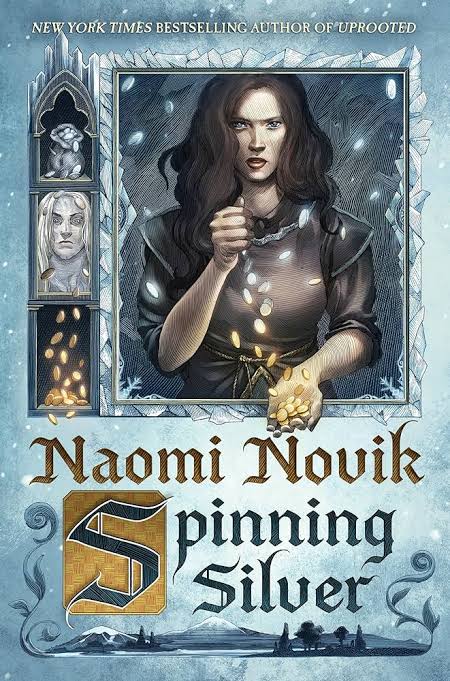
“There is nothing to see but the light in the distance, the ice at her feet, and the darkness inside her.” – Spinning Silver
The quote captures the core theme of the novel, the battle between light and dark within oneself. It highlights the emotional desolation that Miryem, and many of the characters, face as they wrestle with the weight of their power, choices, and sacrifices.
Naomi Novik’s Spinning Silver is not merely a fantastical tale; it is an emotional journey that digs deep into the heart of human struggle, resilience, and transformation. Set against a backdrop of magic, folklore, and stark realities, Novik crafts a narrative that is as emotionally intense as it is gripping. The story is far from just an external battle between good and evil—it is an exploration of the inner worlds of its characters, where their deepest desires, fears, and flaws collide. This emotional depth is where Novik’s writing shines most powerfully.
The book is steeped in themes of survival, identity, and the heavy price of power, all of which resonate in a raw and visceral way. At the heart of Spinning Silver is the journey of Miryem, a young woman forced to take extreme measures to save her family from the crushing poverty that threatens to swallow them whole. It is a story of transformation—both magical and psychological—and one that reveals the cost of wielding power, of becoming something you never imagined you would be, and of the emotional weight of making impossible choices.
1. A World Built on Struggle and Hope
From the very first pages of Spinning Silver, Novik envelops the reader in a world where survival is a daily struggle. The cold, harsh landscape mirrors the emotional landscape of the characters: barren, unforgiving, and relentlessly challenging. The sense of hopelessness that clings to the characters’ lives is palpable—yet so is their quiet, burning desire to change their circumstances. This clash between hopelessness and hope is what gives the book its emotional core.
Miryem’s journey begins from a place of desperation and love for her family, a place where her humanity is almost suffocated by the weight of survival. She turns silver into gold, not for the glory or the power it brings her, but because she wants to save her family from the crushing poverty that defines their existence. The stakes are unbearably high from the very start: one wrong move could destroy not just her life, but the lives of everyone she loves.
This desperation—this constant push-pull between love and fear, between self-preservation and sacrifice—is where the emotional impact of the novel hits hardest. Miryem’s internal struggle as she grapples with the consequences of her actions, the moral compromises she makes, and the coldness that begins to settle into her heart, is deeply moving. She is not just fighting for survival—she is fighting for her soul, for the person she fears she might become in the process.
2. The Emotional Cost of Power
Power is a key theme in Spinning Silver, but not in the traditional sense of triumph or glory. The power that Miryem gains is not a simple gift—it is a heavy burden that slowly strips her of her warmth, her humanity, and her connection to those she loves. Novik crafts a chilling exploration of what it means to gain power at a cost: not just the toll it takes on others, but on the person wielding it.
As Miryem transforms from a poor, resourceful girl into a powerful sorceress, her emotional journey becomes one of alienation. She becomes more isolated from those around her, and the magic she commands begins to change her in ways she doesn’t fully understand. The Staryk, creatures of cold and winter, represent the ice in her soul, and as Miryem gains more control over the magical world, she feels the ice spread through her, threatening to freeze her heart.
This transformation is emotionally devastating. We see Miryem struggle not just with the fear of losing herself, but with the guilt of what her actions have cost. She knows that her power has consequences—not just for herself, but for everyone she loves. And yet, she feels trapped in a world where the only way out is through greater and greater power. Novik shows how the pursuit of power can consume someone from within, and how that consumption can ultimately lead to emotional desolation.
3. Characters Wounded and Resilient
Miryem is not alone in her emotional journey. Spinning Silver is filled with characters who, in their own ways, face deep psychological turmoil and transformation. Wanda, one of the novel’s other central figures, is a poignant representation of the trauma of abuse, both physical and emotional. Her relationship with her father is one of deep pain and neglect, and her role as the caretaker of her brothers further burdens her with an emotional weight she should never have to bear.
Wanda’s emotional evolution is particularly compelling. She begins the story trapped in a cycle of abuse, struggling to break free not only from her father but from the emotional scars that have shaped her. When she enters Miryem’s orbit, she is both a victim of her circumstances and a survivor, but she is also more than that—she is a young woman desperate for agency, for a life of her own choosing. As she grows into her own strength, her journey becomes one of emotional reclamation—learning to trust herself, to stand up for what she believes in, and to carve out her own path amidst the wreckage of her past.
Irina, the third central figure, offers yet another emotional layer. Irina’s journey is not only about political power but about emotional survival in a world that constantly demands her to be something she is not. As she is thrust into the role of empress, her psychological conflict intensifies. She is torn between duty and desire, between the life she wants and the one that is thrust upon her. The emotional toll of her role, coupled with her internal battles, create a character who is both strong and vulnerable, fragile and fierce.
The beauty of Spinning Silver is that all of these characters—Miryem, Wanda, and Irina—are wounded, yet resilient. They are all broken in some way, but it is through their wounds that they learn to heal and grow. Novik’s exploration of emotional trauma and healing is nothing short of profound.
4. The Struggle Between Love and Duty
One of the most emotionally charged aspects of Spinning Silver is the delicate balance between love and duty. For Miryem, Wanda, and Irina, love is not simply a matter of romance—it is a complicated, layered force that pulls them in different directions.
For Miryem, love means the sacrifice of her own humanity in order to protect her family. She is driven by a fierce love for them, but that love becomes a double-edged sword. It lifts her up, but it also weighs her down, pushing her into a position where her very survival becomes an act of moral compromise. Her relationship with her parents, particularly her father, is one of silent, unspoken love that drives her every action. And yet, the deeper she falls into her power, the more that love begins to feel like a burden.
For Wanda, love means protecting her brothers at all costs, even if it means losing herself in the process. Her devotion to them is both beautiful and tragic, as it forces her to continually choose between her own needs and theirs. The emotional cost of her selflessness is felt deeply, particularly as she learns that true love also means learning to take care of herself.
Irina’s struggle is perhaps the most painful of all. Her duty as empress conflicts with her desire for a life of her own, one that would allow her to experience love not as an obligation but as a choice. Her emotional journey is one of quiet rebellion against the expectations placed upon her—an attempt to find freedom in a world that demands she surrender herself for the good of others.
Strengths of the Novel
World-Building and Atmosphere
The world-building in Spinning Silver is undeniably rich. Novik crafts a world steeped in the icy magic of the Staryk, a harsh and unforgiving landscape, yet filled with cultural richness drawn from Eastern European Jewish folklore. The way she blends magic and reality creates an immersive environment, one that feels alive and inhabited by tangible fears, hopes, and dreams. The setting is deeply atmospheric, and the cold, oppressive winters mirror the emotional coldness the characters often feel in their personal struggles.
Character Development
One of the novel’s greatest strengths is its character development. Miryem’s psychological journey is one of the most compelling aspects of the book. Her transformation from a poor, resourceful girl into a powerful sorceress who must grapple with the loss of her humanity is deeply affecting. Novik does an excellent job of showing how the pursuit of power, even for noble reasons, can erode a person’s soul. This character arc is particularly powerful because Miryem is not driven by mere ambition—she is motivated by love and the desire to protect her family, making her moral dilemmas all the more heartbreaking.
The other characters, such as Wanda and Irina, add emotional complexity to the story. Each character faces her own struggle for agency, power, and self-identity, making their individual journeys deeply human and relatable. The emotional weight of their decisions, their sacrifices, and their growth adds another layer of depth to the novel.
Areas for Critique
Pacing Issues
Despite the novel’s strengths, there are moments where the pacing can feel uneven. At times, the plot’s progression seems to slow down, especially when the narrative moves away from Miryem’s storyline to focus on Wanda and Irina. While these character arcs are important, the shifts in perspective can feel abrupt, interrupting the emotional intensity of the central narrative. The change in focus from Miryem’s internal struggle to the political intrigue surrounding Irina, for example, can detract from the emotional buildup that had been carefully constructed.
Overly Dense Prose
Additionally, Spinning Silver can sometimes feel overly dense. Novik’s writing is rich and layered, but there are moments where it leans heavily on exposition and description. While this gives the story texture, it can also make the narrative feel weighed down, especially in sections where the pacing slows. For some readers, this depth may be a reward, but others may find it challenging to push through sections that verge on being too long-winded.
Repetitive Themes
Another critique could be that while the book is rich with female characters, their arcs, though complex and emotionally charged, can at times feel as though they follow a similar trajectory. Each character is caught in a struggle for power and agency, but their individual paths toward self-realization sometimes feel repetitive. In particular, the emotional transformations of Miryem, Wanda, and Irina are similar in that they all wrestle with the cost of their power and the responsibilities that come with it. Though each journey is unique, the repetition of certain thematic elements—such as the sacrifice for family or duty—can occasionally feel formulaic.
Open-Ended Conclusion
Lastly, the ending of Spinning Silver may not provide the emotional closure that some readers expect. Novik leaves certain storylines open-ended, particularly with regard to the characters’ long-term emotional growth. While this can be seen as a bold narrative choice, allowing readers to reflect on the consequences of the characters’ actions, it may leave some wanting more resolution or closure.
5. Conclusion: A Heart-Wrenching and Uplifting Journey
Spinning Silver is a deeply emotional and thought-provoking novel that takes readers through the emotional depths of its characters, leaving them bruised but ultimately uplifted. Naomi Novik’s writing is a masterful exploration of power, identity, and sacrifice, resonating with a raw, almost painful truth. The novel’s strong character development and richly detailed world pull readers into the hearts of its characters, making them feel every triumph and heartbreak. It is a deeply introspective journey that demands reflection on the cost of choices, the emotional toll of sacrifice, and the complex interplay of love, power, and identity.
While the novel’s emotional weight is powerful, the dense prose and shifting perspectives can make it difficult to navigate at times, creating occasional pacing issues and narrative repetition. The exploration of transformation—both of power and of the soul—can sometimes feel overwhelming, but this is part of what makes the book so thought-provoking. Novik delves into the complexities of human desires, the burdens of one’s choices, and the price one must pay for love and ambition.
Ultimately, Spinning Silver succeeds because it doesn’t just tell a story; it plunges readers into the heart of its characters’ emotional journeys. For those who enjoy rich, introspective fantasy that challenges and demands reflection, the novel offers an experience that lingers long after the final page. It is a testament to Novik’s skill as a storyteller and a story about transformation—not just of the world, but of the soul. While its ambitious scope may not be for every reader, it offers deep emotional truths that will stay with you.
 Comprehensive Counselling Interface (CCI)